
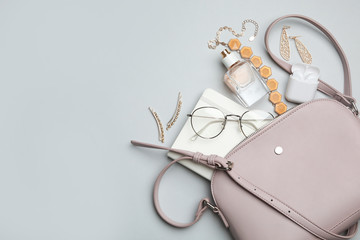
This dusty rose bag is a reliquary of my mother’s soul. I touch the scuffed leather and remember the snap of the clasp that once made her invincible. It is my compass now, ensuring I never walk alone
The Dusty Rose Compass
The leather was the color of a sunset filtered through a London fog—a muted, dusty rose that felt like silk under my fingertips. It sat on my vanity now, a quiet, inanimate survivor of a life that had been anything but quiet. To anyone else, it was just a bag, a stylish accessory from a season long past. To me, it was a reliquary. It was the vessel that held the fragments of the woman who gave me my name, my stubborn chin, and my heart. My mother, Elena, didn’t just carry a bag; she wore it like a shield. I remember being six years old, sitting on the edge of her bed as she "armored up" for the day. She would drop her round glasses into the soft interior, followed by a gold-trimmed notebook where she scribbled thoughts that were too fleeting for the world to see. Then came the perfume—a glass bottle that caught the morning light, smelling of jasmine and something sharp, like ambition. She would click the silver clasp shut, and that sound—a sharp, decisive snap—meant she was ready for anything. I used to think that as long as she had that bag, she was invincible. She used to laugh when I’d try to sneak a peek inside. "Elara, a woman’s bag is her private universe," she’d say, tapping my nose with a manicured finger. "It’s where she keeps her secrets and her strength. One day, you’ll have your own." But I didn’t want my own. I wanted hers. I wanted the smell of her leather and the way the strap looked draped over her shoulder as she kissed me goodbye. The day the world turned gray wasn't dramatic. There were no storms, just a phone call that arrived while the sun was mockingly bright. Cancer is a thief that doesn't just take a person; it takes their rhythm. Within months, the woman who strode through city streets with her dusty rose bag was confined to a white bed where the only scent was antiseptic. The bag sat in the corner of her hospital room, looking strangely heavy, as if it were mourning the loss of the hand that used to carry it. On her final afternoon, she pointed to it with a trembling hand. "Take it, Elara," she whispered, her voice like dry leaves.
Carry the light for me
After the funeral
I couldn't touch it for weeks. It sat on the floor of my closet, a silent reminder of the void in the hallway. But one Tuesday, when the grief felt like a physical weight pressing against my ribs, I reached for it. I sat on the floor and pulled it into my lap. It still smelled of her—that faint, lingering jasmine mixed with the metallic scent of the coins at the bottom. I opened the clasp—snap—and it felt like a door opening into the past. I began to take out the items, laying them across the carpet like pieces of a puzzle. There were her glasses, the ones she wore when she looked at me with such pride. There was the small white notebook, its pages filled with grocery lists, half-finished poems, and a note at the very back that said: Elara’s graduation—don’t forget the waterproof mascara. I felt a sob catch in my throat. She had been planning for a future she knew she might not see. I found the gold earrings she had worn to her last anniversary dinner, tucked into a side pocket. I found a pair of white wireless earphones, a gift I’d given her that she never quite figured out how to use, but kept with her anyway because they were from me. Each object was a heartbeat. Each item was a bridge back to her laughter. Now, on the days when the silence of the house feels too loud, I perform a ritual. I sit at my desk and I organize the bag. I polish the leather until it glows. I arrange the glasses and the perfume just the way she did. I don't use the bag to go out much—it feels too precious to expose to the rain or the crowded subway. Instead, it has become my compass. When I am lost, when I don't know how to make a decision or how to face a hard day, I reach out and touch the dusty rose leather. I close my eyes and I can almost hear her. I can hear the way she’d hum while she looked for her keys. I can feel the strength she poured into that bag, the way she carried her world with grace even when things were falling apart. It isn't just an accessory; it is a piece of her soul that she left behind to make sure I never had to walk alone. The leather is scuffed in one corner now, a small mark of time passing, but to me, it remains perfect. It is the color of a mother's love—soft, enduring, and always, always there to catch the things we are afraid to lose. Sometimes, I catch my own reflection in the mirror, holding the strap just the way she did. For a split second, I see her. And in that moment, the grief doesn't disappear, but it changes. It becomes something I can carry. It becomes as familiar and as necessary as the items in my bag. I am Elena’s daughter, and as long as I have this dusty rose compass, I will always find my way home.
Written by Umar for Nalvyo.